Monday, November 16, 2015

Posted to Building the Scientific Mind - see http://www.learndev.org/BtSM2015.html


Fostering Inquiry, Reasoning and Critical Thinking

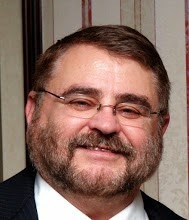
J. Michael Spector, PhD, Professor of Learning Technologies, University of North Texas

Observations and Doubts

In many places around the world one can find people with divergent views. In many of those places, tensions have grown considerably and taken the form of hateful language and even violence. Tolerance and an openness to considering alternative views and perspectives seems to be at all-time lows in some places. Advocacy seems to be displacing evidence. Anger seems to be displacing thoughtfulness. What can be done?
Earlier in my career, I thought that I could use reason and logical argumentation to enlighten those suffering from the throes of dogmatism, prejudice and intolerance. I thought that helping others to develop a scientific attitude could help cures the ills of a society suffering from intolerance. Was I wrong to have such thoughts?
What is it to have a scientific attitude? Some might say that it involves considering beliefs and statements that could potentially be shown to be false or mistaken as those beliefs and statements are worth investigating (for those keeping notes, I am thinking about Karl Popper’s Conjectures and Refutations). If the person holding the belief or making the statement is not willing to consider that it could be wrong, then there seems to be little to be gained in pursuing discourse with that person based on an acceptance of the belief or statement if one happens to doubt that belief or statement. This could be called the walk-away strategy. The drawback is that no progress in terms of understanding or openness occurs as a result. I have walked away too many times.
A somewhat different approach involves thinking about what underlies thinking and reasoning. It then occurs to me to revisit Ludwig Wittgenstein’s works. In the Tractatus Logico-Philosophicus (you really should be keeping notes), Wittgenstein observes at remark 2.1 that we picture facts to ourselves. He fails to note that we also picture things that are not factual to ourselves. Nevertheless, the remark that we picture facts to ourselves is the kernel notion in a naturalistic or constructivist epistemology – we create internal representations to make sense of things that we experience that are new, unusual or otherwise puzzling. The last remark in the Tractatus is that what we cannot speak about [clearly] we must pass over in silence. As it happened, there was much that Wittgenstein wanted to speak about, as is evident in Philosophical Investigations published after his death. In that posthumous work, he introduced the notion of language games. Not only do we create internal representations to make sense of new and puzzling things, we talk about those representations with others. We engage in language games. Such discourse represents a re-representation of the internal representations that are basically hypothetical entities that no one ever directly observes. These two ideas – creating internal representations and engaging in discourse about those representations – are the basis of a socio- constructivist epistemology that is prevalent in some educational and philosophical circles.
Then my mind wanders into ancient gardens and I stumble across the works of Sextus Empiricus and Outlines of Pyrrhonism. Since that work was written in Greek, I decided to read it from back to front. After describing what it is to be a skeptic but before I read that part, Sextus argues that being a skeptic will result in peace and tranquility. Is that not odd? Well, in my typical state of anxiety and confusion, it seems highly desirable. How to achieve such intellectual peace and tranquility? I had to read the first part to find an answer to that question.
Basically, becoming a skeptic involves recognizing that many (possibly most) beliefs and statements are open to investigation. A dogmatic position results when one believes something about which there exists a basis for doubt or further investigation; a variant of dogmatism occurs when one believes that there is no possible answer to a question or issue. In both of those cases, no further inquiry can occur and the discourse is cut off (recall the walk-away strategy mentioned earlier). A skeptic, however, is someone who recognizes that further investigation is possible even when the available evidence apparently favors one or another of the many possible beliefs or positions. A skeptic, in the world of Sextus Empiricus, is not held captive by his or her beliefs.
I have to admit that from that conclusion (many or most beliefs are open to further investigation and possible refutation) to intellectual peace and tranquility is a leap – at least for me (I have short legs). Nonetheless, I have developed a few suggestions that might lead a student to a path not yet taken.

The Suggestion

As I am close to retiring after more than 40 years in higher education, I am beginning to understand the role of a teacher in fostering inquiry, reasoning and critical thinking. There are two pieces to the puzzle that I am trying to piece together.
The first is the notion of having questions. The job of a teacher is to help students have questions – not to help them ask questions or give them answers. To have a question involves (a) admitting that one does not know (with certainty or with extremely high confidence) something, (b) committing time and effort to finding answers, (c) being willing to consider alternative perspectives and approaches, and (d) being willing to revisit the entire process again and again (akin to Socrates asking Crito to explain again why he should escape). It seems to me that all too often students are taught to have answers rather than to have questions. Learning how to have questions should be considered a basic skill, akin to reading Plato’s Symposium, writing love letters, and calculating Ï€ (I happen to love transcendental numbers). If this argument is accepted, then inquiry should be introduced early and often in primary and secondary education.
The second piece to this puzzle (which seems very difficult to put together) is a framework that can support a wide variety of inquiries – that is to say, cases of having questions. One framework that might fit into this very complicated puzzle (supporting inquiry, reasoning and critical thinking) involves considering argument forms. An argument can be considered a collection of statements (premises) offered in support of another statement (the conclusion). A form of scientific reasoning can be mapped onto this notion of an argument form. Logicians typically distinguish deductive arguments from non- deductive arguments since the criteria for evaluating them are different. That distinction is not necessarily relevant to this brief and tenuous excursion into inquiry learning. The figure below depicts the general form of an argument. The reason for introducing such a framework early in a child’s education is that it can establish a habit of mind – namely the habit of thinking of the adequacy of the evidence, the habit of identifying unstated assumptions that might also merit inquiry, and the habit of looking at the implications of what one believes. If those habits are established early in a child’s education, then there is a remote possibility that more children will begin to think scientifically. Perhaps


there is a remote possibility that when those children become adults that they will be free from dogmas that create tension, confusion and strife within society. There is a remote possibility.

Concluding Statement

I cannot pretend to have found answers or even useful paths to follow. I have only been able to create possibilities. With regard to possibilities, I see several varieties. There are bare possibilities, such as the possibility that the number of grains of sand on the shores of Iwo Jima at a particular point in time is an odd number. There are also practical possibilities, such as the possibility of significantly reducing hunger and violence in a particular part of the world. Another practical possibility is that the children of today may indeed become skeptical inquirers (i.e., non-dogmatic investigators) and critical thinkers. That last practical possibility, however, is not likely to occur without the efforts of many of those involved in such efforts as the Building the Scientific Mind enterprise.


Saturday, September 19, 2015

Random thoughts on the sciences of learning

Part1: Setting the table

1.     I know less than I am often inclined to believe that I know. I am certain that I know less than many others think I know.
2.     Learning is characterized by a change in what a person (or group of people) know, believe or can do. Learning is fundamentally about change. To claim that learning has occurred then requires some evidence of a change. Some learning is intentional – that is to say, associated with a goal – and some learning is non-intentional – that is to say, incidental or unplanned or not explicitly associated with a goal.
3.     Instruction, simply and broadly stated, is that which is intended to facilitate, support or enhance intentional learning.
4.     There are (a) different kinds of things that can be learned, (b) a variety of learning approaches, (c) different ways to design, organize, orchestrate and facilitate learning, (d) a variety of tools, technologies and resources to support learning and instruction, (e) relevant differences among learners with regard to prior knowledge, interests, preferences, habits, language, culture, age, gender, individual circumstances, etc., and (f) many of the aforementioned items change over time, including an individual learner’s particular circumstances (activities, emotions, friends,  health, etc.) and especially the tools, technologies and resources that can be used to support, facilitate and enhance learning.
5.     What is known about human learning is based on the work of psychologists, epistemologists and educational researchers and includes the work of anthropologists, behaviorial psychologists, biologists, cognitive psychologists, constructivists, educational psychologists, epistemologists, neural scientists, organizational psychologists, social scientists and others. No one discipline or group of researchers offers a complete account of learning. Indeed, knowledge about human learning is incomplete and evolving. More complete accounts of learning are likely to require more systematic multi-disciplinary efforts over a sustained period of time. Meanwhile, society and educational institutions are committed to providing effective and reasonable support for learning given limited knowledge, the wide variety of learning tasks, learning situations and learners, along with a vast array of learning approaches, tools, technologies, and resources.
6.     The design of learning activities and environments and instructional technologies and systems, therefore, is by nature a dynamic, complex, challenging, and somewhat ill-structured enterprise.
7.     Learners want to learn; educators want to support learning; designers and developers want to design and develop appropriate and effective learning approaches, tools, technologies and resources; institutions and funding agencies want to pursue and support effective and efficient means to support learning; and researchers want to better understand all aspects of human learning. There are wants and desires as well as needs and requirements. There are decisions to be made and policies to be developed. What are we to do?

Part 2: Preparing the feast

1.     An early holistic and coherent (but not currently accepted) account of learning and instruction can be found in Plato’s dialogues known as Meno and Phaedo. In those dialogues, Plato argues for an alignment of what it is to be a person, what it means to learn something, and how learning can be supported. With regard to being a person, Plato argues that a person has an immortal soul (non-material essence) that existed prior to birth and that continues to exist after birth. Being born involves a traumatic event – namely, encasing the eternal soul in the transient form of a human body. Because a soul is immortal and has existed forever, it already knows everything. However, the process of being born is so traumatic that it causes the soul to forget most things. Learning, then, is a process of gradually remembering the things the soul knew before its most recent incarnation in a body. Instruction – the support of learning – then becomes a process of reminding a person of what he or she already knows. Plato attributes that activity of reminding to be best exemplified by Socrates. Socrates, of course, was rewarded by society for being such an effective reminder (teacher) that he was put to death for corrupting the youth – getting them to think, which is to say remember, according to Plato.
2.     It is unlikely that Plato’s account of being a person, learning and instruction are accepted by many these days. Why mention it? The reason is that the desire for a coherent and comprehensive account for learning remains in spite of most people rejecting Plato’s account. To borrow from Nietzsche, another philosopher, the first question of conscience for an educational technology researcher or a learning scientist is whether one should expect a coherent and comprehensive account of human learning (see Nietzsche’s Twilight of the Idols for the original version; available at http://www.handprint.com/SC/NIE/GotDamer.html). By the wayside (a park in Pensacola, Florida where I learned to swim), Socrates is one of the idols that Nietzsche discusses in detail. Nietzsche generally praises Socrates for exemplifying the qualities of a genuine skeptic (a seeker of knowledge who admits to not knowing something and who is engaged in inquiry to find out) with one exception – namely, Socrates apparently believed that he knew the value of life and chose to accept the sentence of being put to death by poison hemlock rather than take the opportunity to escape from jail, which most assumed he would do. According to Nietzsche, Socrates judged that life was not worth living and that by dying he would be going to a better place, joining those immortal souls mentioned previously. Nietzsche points out that a human life cannot be judged – not by others as their knowledge is necessarily incomplete and not by oneself as there is an inherent bias.
3.     Why this second journey into old philosophy? Like T. S. Eliot’s J. Alfred Prufrock (see http://www.bartleby.com/198/1.html),”I grow old” … “it is impossible to say just what I mean” … “do I dare disturb the  universe?” … “how should I presume?” Learning, instruction and education are inherently complex constructs. Perhaps the skeptical attitude that Nietzsche indirectly suggests is appropriate. There may not be a coherent or complete or comprehensive account of learning, instruction and education. Perhaps the attitude worth adopting is one that is open to alternatives and partial accounts of what seems to be happening and why in specific situations. Perhaps those involved in educational research ought to be more modest, especially when making claims about general causal factors. Perhaps.
4.     After EduSummit 2015 (see http://www.curtin.edu.au/edusummit/event.cfm) held in Bangkok this September, I mentioned to Punya Mishra that it seemed like the older I got the less I knew – in the context of an exchange about creativity. I added that my goal in life was to not know a lot. 
5.     Back to the task of what this might mean in the context of learning, instruction and education – what progress can be made with regard to systematic and sustained improvement in our understanding of learning, instruction and education? The question already reflects a bias – namely that there can be systematic and sustained improvement and that such improvement is a legitimate and attainable goal. Skeptics have been known to be optimistic. Scientists have been known to be optimistic, even when arguing that progress occurs when a hypothesis is shown to be inadequate or wrong.  Roger Schank has argued that all learning is failure driven (for a brief overview, see https://net.educause.edu/apps/er/review/reviewArticles/30114.html). This account of learning has instructional implications – namely, that there should be a space that allows for failure and support for understanding and improving on account of that failure. Schank, then, links the nature of learning (failure-driven) to the nature of effective instruction (allowing for and supporting failure).
6.     Given the diverse collection of things to be learned, resources, approaches, learners, learning situations, and so on, perhaps the way forward is in terms of baby steps – that is to say, perhaps one might select a specific family of related cases (e.g., one-on-one tutoring of reading to a young child, or small group medical diagnosis to general practitioner interns, or helping environmental students develop potential policies aimed at a addressing a particular problem, and so on), review prior research and efforts, design an approach, try it out, refine it, try it out again, make further refinements, and try it out with still others, thereby establishing a framework for what is likely to work in that situation along with, perhaps, an explanation, a theoretical basis and hopefully supporting evidence. One might then go on to apply the approach in related cases, thereby building up a conceptual framework with associated evidence and theoretical foundations for that family of cases.
7.     Given the notion of families of cases, one might then consider nearby families and take an approach that seems to work for one family of cases to another family and investigate what variations might be needed to see progress in terms of learning in those cases. Of course there are issues involved in identifying a family of cases and what constitutes nearby families. There are nearly always issues involved in what educational researchers do because learning, instruction and education are complex, ill-structured enterprises. Just because one finds issues with a particular approach, or with the approach of a particular group of researchers, does not mean that that approach or their perspectives are wrong or wrongheaded. If an enterprise is really dynamic, complex and ill-structured, then ought we not be open to alternative approaches and explanations, however far they seem from our own points of view? To add to the complexity, learning and instruction are by their very nature dynamic enterprises. That is to say that during a learning activity or instructional sequence, what the learner is doing or what the learner understands is likely to change. Moreover, in a problem-solving context, the problem itself may well change while a learner is engaged in finding a solution or solution approach.

Part 3: Enjoying the feast

1.     Recalling Nietzsche’s criticism of Socrates, one might conclude that judging one’s own works and creations is perhaps a biased enterprise and best left to others, even though their knowledge may be incomplete. This suggests that replication studies (not exact duplications but studies involving similar goals, instruments, methods and participants) will enhance our understanding (like seasonings we add to a dish we have prepared).
2.     Perhaps what is done in this study or case can be regarded as something to be improved upon in a future study or case – we can nearly always do better (tell those invited to the feast that this is basically an experimental feast … next year’s feast will be even better).
3.     Working alone or in isolation or within a closed community is not likely to be an efficient way to make progress with regard to understanding dynamic, complex and ill-structured phenomena (invite a variety of people to the feast and plan for spirited conversation over the meal).
4.     During the investigation, be open to changing the questions being asked and the direction of the effort – after all, the context involves dynamic, complex and ill-structured problems (be prepared to listen and ask rather than preach and teach; sample a different dish).
5.     Think of the enterprise as a system with many interrelated components and relationships among those components; the boundaries of a learning or instructional or educational system are necessarily fuzzy and arbitrarily drawn for the purpose at hand (one cannot serve everything at a feast – focus on what seems most relevant but be willing to change, at least in the next iteration of the feast).
6.     Adopt the Universal Underlying Principle of all Systems (UUPS – pronounced ‘oops) – namely that before you begin the investigation, a mistake has already occurred. Then recall the three UUPS corollaries: (x) mistakes rarely happen in isolation, (y) one rarely has sufficient resources to do what one believes should be done, and (z) others generally have better ideas. After all, learning inherently involves (a) humility (admitting that one does not know), (b) effort (committing time and resources to finding an acceptable solution), and (c) openness (willingness to explore alternative explanations and revisit assumptions). Learning about learning might then require similar kinds of things (savor the variety of dishes involved in the feast and think ahead to the next feast).

7.     Do not forget to share findings and seek critiques (don’t forget the dessert – contributing to what is known and publishing findings).